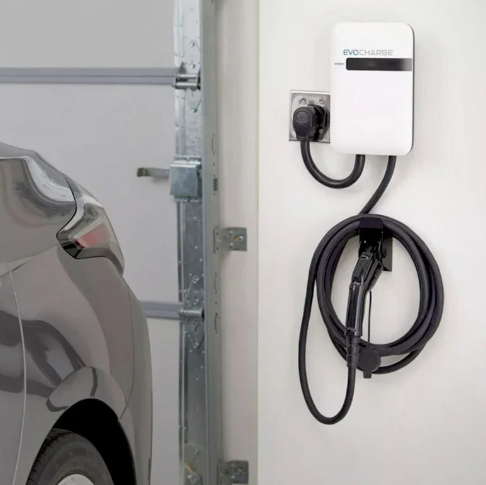
Choosing an EV charger installer involves more than finding someone who can mount equipment on a garage wall. A Level 2 charger places a substantial, continuous load on your home’s electrical system, so an electric car charger installer must determine whether the panel can support that load, select the correct circuit and wiring, obtain required permits, and complete the work according to current electrical codes.
Before comparing quotes from EV charger installers for your Scottsdale home, you’ll want to do a bit of research.
Verify the Contractor’s Arizona License
Start by confirming that the contractor holds an active Arizona license appropriate for electrical work. The Arizona Registrar of Contractors provides an online search tool so you can make sure they have a current license.
Make sure the name on any estimate matches the licensed business rather than relying only on a salesperson’s statement that the company is licensed. While a contractor’s license does not guarantee that a project will be problem-free, it helps distinguish a legitimate electrical contractor from an unlicensed handyman who may not be qualified as an electric car charger installer.
Look for EV Charging Experience
General electrical experience matters, but home charging presents specific design considerations. The installer should understand continuous-load requirements, charger amperage, vehicle charging limits, equipment compatibility, and load-management options.
Ask prospective installers:
- How many residential EV chargers have you installed?
- Do you install both hardwired and plug-in equipment?
- Can you install chargers outdoors?
- Do you perform electrical load calculations?
- Can you install load-management equipment if capacity is limited?
A qualified electric car charger installer should be able to explain the proposed circuit size and why it matches the charger. For example, a charger operating continuously at 40 amps generally requires a circuit rated at least 50 amps.
Ask Whether a Load Calculation Is Included
Your installer should evaluate major loads such as:
- Air-conditioning systems
- Electric water heaters
- Ranges, ovens, and dryers
- Pool pumps and heaters
- Solar and battery equipment
- Existing 240-volt circuits
- Planned appliances or additional EVs
This evaluation is critically important in the Phoenix area, where our AC puts substantial loads on our systems, especially with the number of 100+ degree days we have every year.
A capable installer should also discuss alternatives to a full panel upgrade. For example, your home may be able to support a lower-amperage charger or an energy-management device that adjusts charging when other major loads are operating.
Confirm Who Handles Permits and Inspections
Permit requirements vary among Phoenix, Scottsdale, Mesa, Chandler, Glendale, Gilbert, and other Valley communities. Do not assume an EV charger installation is too small to require one.
Ask whether the estimate includes:
- Preparing the permit application
- Paying permit fees
- Scheduling the inspection
- Correcting any installation-related deficiencies
The contractor should identify which party is responsible for each step. Be cautious if an installer tells you permits are unnecessary without checking the requirements for your municipality and project scope.
Permits and inspections add time and expense, but they provide documentation that the appropriate local authority reviewed the electrical work. This may also matter when selling the home or filing an insurance claim connected to electrical work.
See also: 15 Business Documents Every Enterprise Should Automate First
Review APS Qualified Installers
Arizona Public Service maintains a Qualified Technology Installer program for contractors who work with technologies such as electric vehicle charging stations, solar systems, battery storage, and heating and cooling equipment. APS provides an online installer directory, which includes George Brazil.
An APS listing can be another useful screening factor, but homeowners should still review licensing, project experience, estimates, warranty terms, and compatibility with the selected charger.
Check Charger Compatibility
Not every charger is appropriate for every home or vehicle. Before installation, the electrician should review the charger’s voltage, amperage, connection type, cable length, and indoor or outdoor rating.
The charger’s output should be matched to both the electrical system and the vehicle’s onboard charging capacity. Installing a more powerful unit does not increase speed when the vehicle cannot accept the additional power.
You should also determine whether a utility rebate requires a specific smart charger. Both APS and SRP offer rebates from time to time, but only on select equipment.
Understand the Workmanship Warranty
Ask for warranty terms in writing. Charger manufacturers typically cover the equipment, while the electrical contractor covers installation workmanship. Find out how long the contractor guarantees its work and who handles problems involving loose connections, nuisance breaker trips, charging interruptions, or failed inspections. Also ask whether labor is covered if the charger itself must be replaced under the manufacturer’s warranty.
Contact George Brazil to schedule an assessment for a safe, code-compliant home EV charging installation. We offer same-day service from highly-trained EV charger installers and upfront pricing so you know exactly what your EV charger installation will cost.