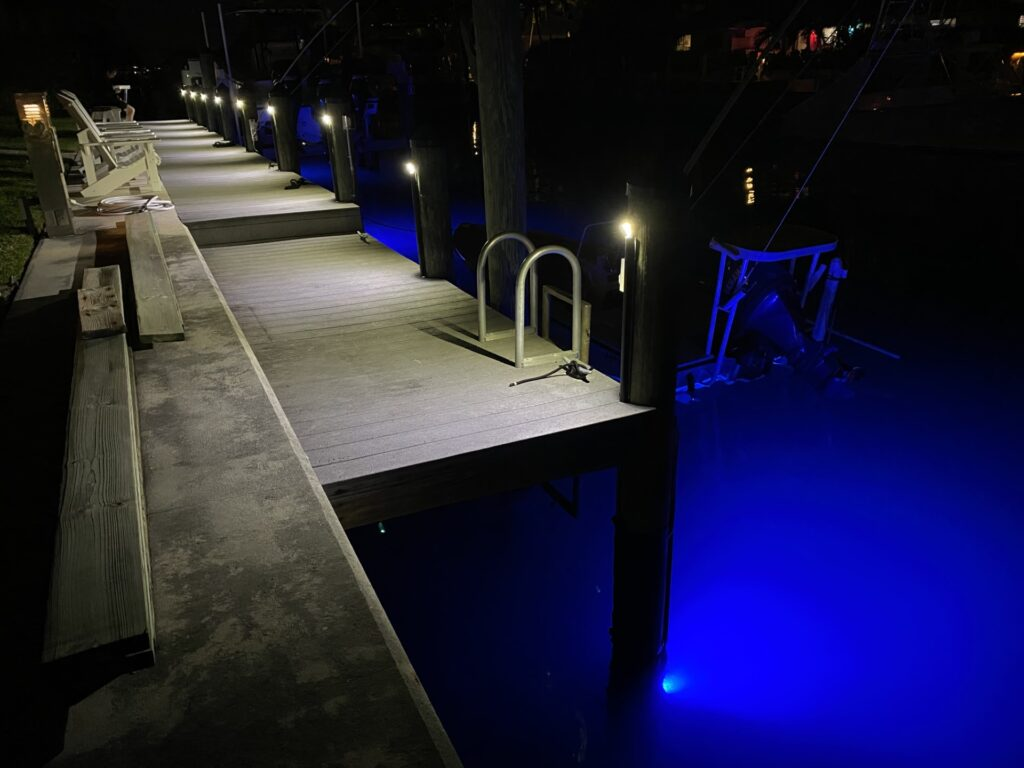
Marine lighting has evolved far beyond simple bulbs mounted around a boat. Modern boats, luxury yachts, fishing vessels, workboats, and offshore craft increasingly depend on advanced LED lighting systems that can deliver reliable illumination while operating in saltwater, high humidity, intense sunlight, vibration, temperature fluctuations, and constant exposure to spray. Unlike conventional outdoor lighting, marine lighting must be engineered specifically for an environment where water and electricity are in close proximity and corrosion can quickly damage unprotected components.
Advanced marine LED lighting solutions combine high-efficiency LEDs with waterproof construction, corrosion-resistant materials, thermal management, impact resistance, and specialized electrical protection. These technologies help improve visibility, safety, energy efficiency, comfort, and the overall appearance of a vessel. For navigation lights in particular, compliance is also critical. In 2025, the U.S. Coast Guard accepted ABYC C-5 as an equivalent to UL 1104 for navigation-light compliance, providing an updated standard that specifically addresses modern LED technology.
Why Harsh Marine Conditions Require Specialized LED Lighting
Boats and yachts operate in one of the most demanding environments for electrical equipment. Saltwater is highly corrosive, and salt-laden moisture can reach connectors, housings, circuit boards, fasteners, and electrical terminals. Repeated exposure can cause oxidation, corrosion, electrical resistance, and eventual component failure.
Vibration is another important challenge. Engines, waves, docking impacts, and constant movement can place mechanical stress on fixtures and wiring. A lighting product designed for a stable indoor environment may not withstand years of vibration aboard a vessel.
UV radiation can also degrade exposed materials. Plastic lenses, seals, cable jackets, and coatings may become brittle, discolored, or weakened after prolonged exposure to sunlight. In addition, high temperatures can affect LED electronics and reduce operating life if heat is not efficiently managed.
For these reasons, marine lighting should not simply be selected based on brightness. The complete fixture—including its housing, lens, seals, wiring, connectors, mounting system, and electronics—must be designed for the intended marine environment.
Waterproof and Ingress Protection
One of the most important specifications for marine LED lighting is its IP rating. IP ratings indicate the degree of protection a product provides against solid particles and water ingress.
For many exterior marine applications, IP65 and above may be appropriate, while fixtures exposed to substantial spray or temporary immersion may require IP67 or IP68. Underwater applications require particular attention because IP68 is not a universal specification; the manufacturer should define the permitted depth and duration of immersion.
IP69K can be valuable in areas exposed to high-pressure cleaning. It is designed for protection against high-pressure, high-temperature water jets and is therefore useful in demanding washdown environments. Some marine lighting manufacturers offer products combining sealed construction with IP67 or IP6K9K protection for harsh applications.
However, an IP rating alone does not make a fixture genuinely marine-grade. A product can have excellent water resistance while still suffering from corrosion if its housing, fasteners, connectors, or internal components are poorly selected.
Corrosion-Resistant Construction
Corrosion resistance is fundamental to long-term marine lighting performance. Saltwater and salt spray can attack exposed metal surfaces and electrical connections, while contact between dissimilar metals can contribute to galvanic corrosion.
Marine LED fixtures commonly use corrosion-resistant materials such as marine-grade aluminum and stainless steel. Stainless steel components should be selected carefully according to the application, particularly in areas with continuous saltwater exposure.
Protective coatings can provide another layer of defense. High-quality powder coatings, anodized finishes, and specialized marine coatings can protect metal housings from moisture and salt exposure. Sealed electrical compartments can further prevent humid, salt-laden air from reaching sensitive electronics.
Material compatibility is particularly important when a light is mounted to a different metal surface. Designers should consider the complete assembly rather than evaluating the fixture housing in isolation.
Advanced LED Technology for Marine Applications
LED technology offers several advantages over traditional incandescent and halogen lighting. LEDs consume substantially less electrical power for comparable illumination, making them especially attractive for vessels where battery capacity and generator loads matter.
Lower energy consumption can help reduce the electrical load on a vessel, while the long service life of LEDs can reduce the frequency of lamp replacement. LEDs also turn on instantly and can provide precise color output for navigation, task, accent, and underwater applications.
Modern marine LED systems can also incorporate dimming, multiple color modes, programmable lighting scenes, and centralized controls. On yachts, these capabilities allow the same lighting system to support practical illumination during work and navigation while also creating an attractive atmosphere during entertaining.
Some advanced products provide white light alongside red or blue modes. Red lighting, for example, can be useful where maintaining night vision is important, while adjustable white lighting can support different interior and exterior activities.
Navigation Lighting and Safety
Navigation lighting is one of the most safety-critical applications aboard a boat. Port, starboard, stern, masthead, towing, and all-round lights must provide the required color, intensity, visibility, and positioning for the vessel and operating conditions.
Modern regulatory standards increasingly recognize the specific characteristics of LED navigation lights. ABYC lists A-16 for installation of electric navigation lights and C-5 for construction and testing of electric navigation lights.
The U.S. Coast Guard’s acceptance of ABYC C-5 is particularly significant because the standard addresses LED-specific considerations such as luminous intensity, color, service-life degradation, electromagnetic compatibility, materials, construction, and labeling.
When selecting navigation lights, boat owners should therefore look for products with appropriate certifications and approvals rather than choosing a fixture solely because it is bright or waterproof.
Underwater LED Lighting
Underwater lighting has become increasingly popular on modern yachts and recreational boats. It can improve visibility around the hull at night while also providing an attractive visual effect.
Because underwater fixtures remain in direct contact with water, their construction must be exceptionally robust. Water ingress, pressure, corrosion, cable penetration, and heat dissipation are all important considerations.
Underwater lights may use corrosion-resistant housings, sealed electronics, specialized lenses, and carefully designed cable entries. Installation is equally important because even a high-quality underwater light can fail if the cable connection or mounting penetration is inadequately sealed.
The desired beam angle and color should also be considered. Wide beams can illuminate a larger area around the hull, while narrower beams can provide concentrated illumination.
Thermal Management and LED Reliability
LEDs are efficient, but they still generate heat. Excessive heat can reduce the performance and service life of LEDs and electronic components.
Marine fixtures therefore require effective thermal management. Metal housings can help transfer heat away from the LED assembly, while carefully designed heat sinks and thermal interfaces can prevent excessive operating temperatures.
This becomes particularly important in enclosed locations or in hot climates where ambient temperatures are already high. A fixture should be evaluated for its complete operating temperature range rather than its LED chip specifications alone.
Vibration and Impact Resistance
A boat is rarely stationary. Even when cruising on relatively calm water, engines and waves create continuous vibration. During offshore operation, impacts can become considerably more severe.
Advanced marine LED fixtures can address these conditions through reinforced housings, impact-resistant lenses, secure mounting systems, flexible marine-grade wiring, and sealed electronics.
For exterior fixtures, impact resistance is especially valuable around decks, walkways, boarding areas, and working spaces. A durable lens can reduce the risk of damage from accidental impacts or flying debris.
Energy Efficiency and Smart Lighting Controls
Energy efficiency is one of the strongest reasons to upgrade a vessel’s lighting system to LED. Reduced electrical consumption can be particularly valuable on smaller boats that depend heavily on battery power.
Smart controls can increase these benefits. Modern marine lighting systems may support centralized control panels, digital switching, dimming, programmable scenes, and integration with onboard automation systems.
For example, a yacht could have separate lighting scenes for cruising, entertaining, anchoring, night navigation, and emergency situations. Interior lights could be dimmed to reduce power consumption, while exterior lighting could be activated only when necessary.
Smart controls also improve convenience by allowing multiple fixtures to be operated from centralized locations rather than requiring individual switches throughout the vessel.
See also: 15 Business Documents Every Enterprise Should Automate First
Choosing the Right Marine LED Solution
Selecting marine lighting should begin with the application’s environmental conditions. A cabin light has very different requirements from an underwater light or navigation lamp.
Important specifications to consider include:
- IP rating: Select protection appropriate for the expected exposure to water.
- Corrosion resistance: Check housing, fasteners, connectors, and coatings.
- Operating voltage: Ensure compatibility with the vessel’s electrical system.
- Temperature range: Consider both ambient temperature and fixture operating temperature.
- UV resistance: Important for exposed exterior fixtures.
- Impact and vibration resistance: Particularly important on working boats and offshore vessels.
- Certifications: Navigation lights should meet applicable regulatory and industry requirements.
- Optical performance: Consider brightness, beam angle, color, and visibility requirements.
- Installation method: Verify mounting, cable routing, sealing, and electrical connections.
- Maintenance requirements: Choose designs that minimize exposed connections and service points.
Marine electrical installations must also be suitable for the vessel’s movement and corrosive environment. U.S. federal regulations, for example, specify that electrical equipment exposed to corrosive environments must have suitable construction and corrosion-resistant characteristics, while electrical installations must be suitable for the roll, pitch, and vibration of a vessel underway.
Maintenance for Long-Term Performance
Even advanced marine LED systems require appropriate maintenance. Fixtures should be inspected periodically for corrosion, damaged seals, loose mounting hardware, cracked lenses, and deteriorated cables.
Salt deposits should be removed according to the manufacturer’s cleaning recommendations. Electrical connectors should be kept properly sealed, and any damaged cable or gasket should be replaced promptly.
Navigation lights deserve particular attention because their failure can become a safety issue. Owners should periodically verify that navigation lights are functioning correctly and remain unobstructed.
Preventive maintenance is generally more effective than waiting for water ingress or corrosion to cause complete fixture failure.
The Future of Marine LED Lighting
The next generation of marine lighting is likely to combine high-efficiency LEDs with increasingly sophisticated control systems, sensors, networking, and automation. Yacht owners can expect greater integration between lighting and onboard digital systems.
Adaptive lighting could automatically adjust brightness according to ambient conditions, while connected systems may allow owners to monitor lighting status and identify potential faults. More efficient LEDs and advanced optical designs can also help reduce energy consumption without sacrificing illumination.
For commercial vessels, reliability and maintainability will remain key priorities. For luxury yachts, customization, color control, aesthetics, and integration with entertainment systems will continue to influence lighting design.
Conclusion
Advanced marine LED lighting is much more than a high-brightness alternative to conventional bulbs. In harsh marine conditions, a reliable lighting system must combine efficient LED technology with waterproof construction, corrosion resistance, UV protection, thermal management, mechanical durability, and appropriate electrical protection.
The best solution depends on where and how the light will be used. Navigation lights require regulatory compliance and precise optical performance, underwater fixtures require exceptional sealing and corrosion protection, while interior and accent lighting may prioritize energy efficiency, comfort, and smart controls.
By selecting purpose-built marine LED products and combining them with correct installation and preventive maintenance, boat and yacht owners can achieve safer, more efficient, and longer-lasting illumination—even in demanding saltwater environments. The result is a lighting system capable of performing reliably when exposed to the very conditions that make marine applications so challenging.